
FRONTIER ECOSYSTEM FINANCE
Degraded land can't attract capital. Lasting ecosystems can.
We build the financial infrastructure that lets investors fund ecological transitions without buying the land. The work lowers fire risk, brings water back, and puts people to work. Investors are paid from what the land produces and what it stops costing: biochar, energy, filtration media, carbon, grazing, and contracted reductions in insurance premiums and municipal treatment costs. Any owner. Any jurisdiction. Inclusive of the communities who live on the land.
An ecological death spiral.
As landscapes degrade through a combination of drought, wildfire, a history of overgrazing, the absence of holistic grazing, and a lack of human stewardship, the land spirals into decline, with each factor feeding the others. The work is to break that cycle and turn the spiral upward, so that the processes of fire, water, forestry, human capacity, and others uplift the landscape in a continued cycle of renewal as it crosses thresholds toward abundance rather than decline.
5M+ acres
burned across New Mexico in two decades, mountain range after mountain range
341,000 acres
the Hermits Peak fire alone, the state’s largest, almost 10 times the Palisades and Eaton fires that cost Los Angeles $250B
$5.4B
in federal payouts after the fires, not for what comes next
$1B+
in water-compact liability, just settled between New Mexico and Texas
We are already paying for landscape degradation, and the markets have factored it in for years. Twenty years of bond data show that as a region's land degrades, it pays more to borrow: affected U.S. county yields run about 11 basis points higher, and sovereign spreads 25 to 75 basis points higher, with the most degraded borrowers paying up to three times that. So a region carries a higher cost of capital, on its equity and its debt, without doing anything about the land. That ongoing cost is larger than what it would take to turn the land around.
See the research and the math →30 years. Millions of acres.
Our team has designed and monitored landscape-scale ecological projects spanning decades and millions of acres. This is not a first attempt, it is the financial infrastructure those projects never had.

Malpai Borderlands
Southern New Mexico1,000,000 acres · 2 countries · 4 states · 8 counties · 30+ years (ongoing)
The most intensely studied landscape-scale ecological project in the American Southwest. Same biomes, same fire regime, same cultural context as the current NM pilot. The project's Achilles heel, reliance on federal and foundation funding that collapsed after the 2008 financial crisis, is exactly what the Transition Facility architecture solves. The financial infrastructure didn't exist. Now it does.
Warner Glenn and Kelly Glenn, ranchers; Richard Knight, Colorado State University. Curtin, C.G. (2015), peer-reviewed book documenting the project
Blackfoot Challenge
Western Montana2,000,000 acres · Multi-watershed collaborative · Multi-decade
World-famous trout fishery watershed. High land values demonstrate the economic returns of ecological integrity at landscape scale. Comparative analysis published with the Malpai project, same methods, different biome, same structural findings.
Charles Curtin, comparative design and monitoring. Curtin, C.G., peer-reviewed book comparing Malpai Borderlands and Blackfoot Challenge
Downeast Initiative
Gulf of Maine, Downeast Maine7,500 square miles · Nearshore groundfish and lobster fisheries · Since 2001 (ongoing)
The Downeast Initiative has worked since 2001 to revive groundfish and lobster fisheries across a 7,500 square mile watershed. Much like the landscapes of the West, nearshore fisheries have basins, valleys, and mountains, the highest of which surface as islands. The same patterns of resource use, abundance, and collaborative stewardship hold, which shows these processes are ubiquitous across wet and dry ecosystems.
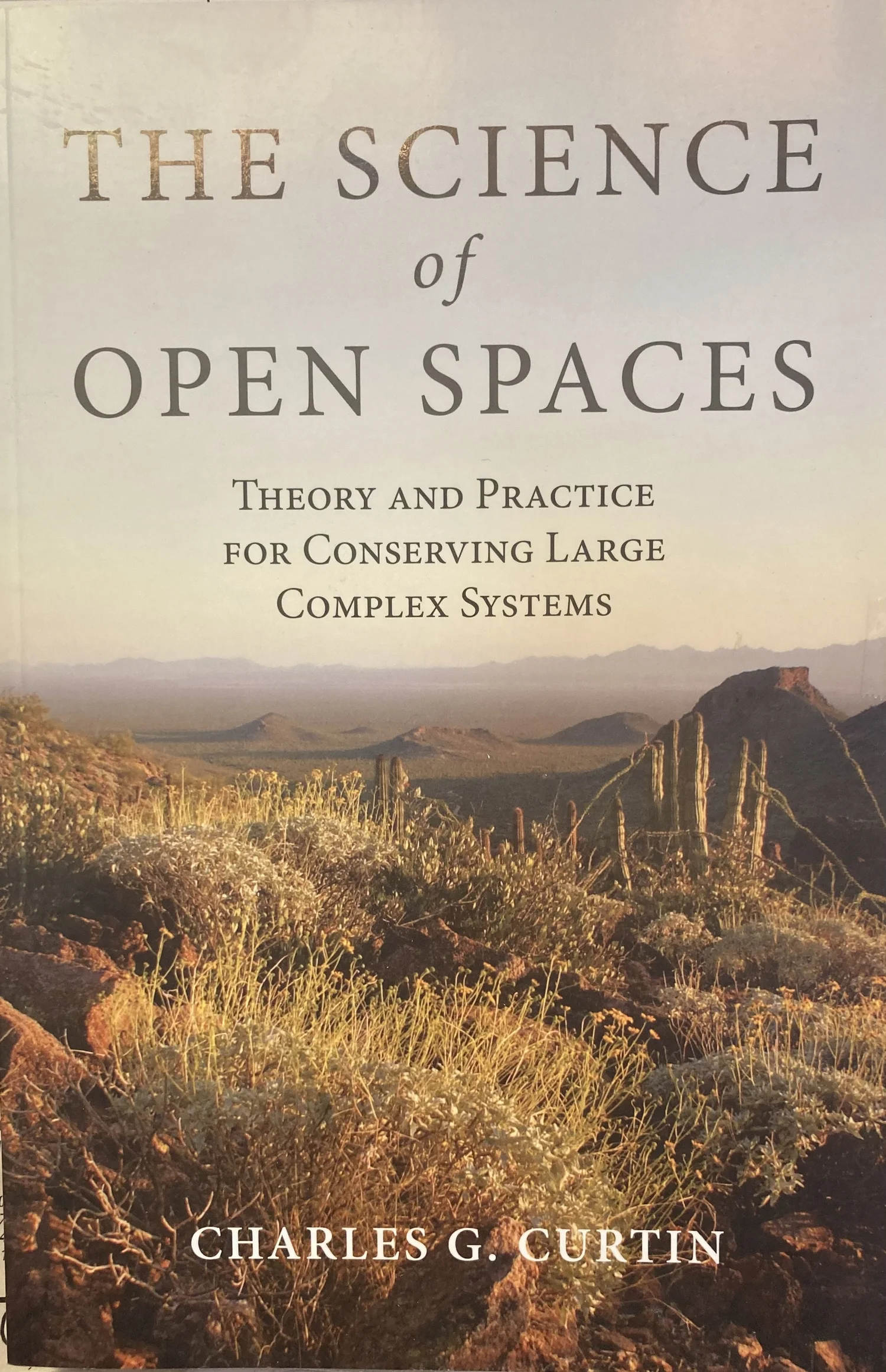
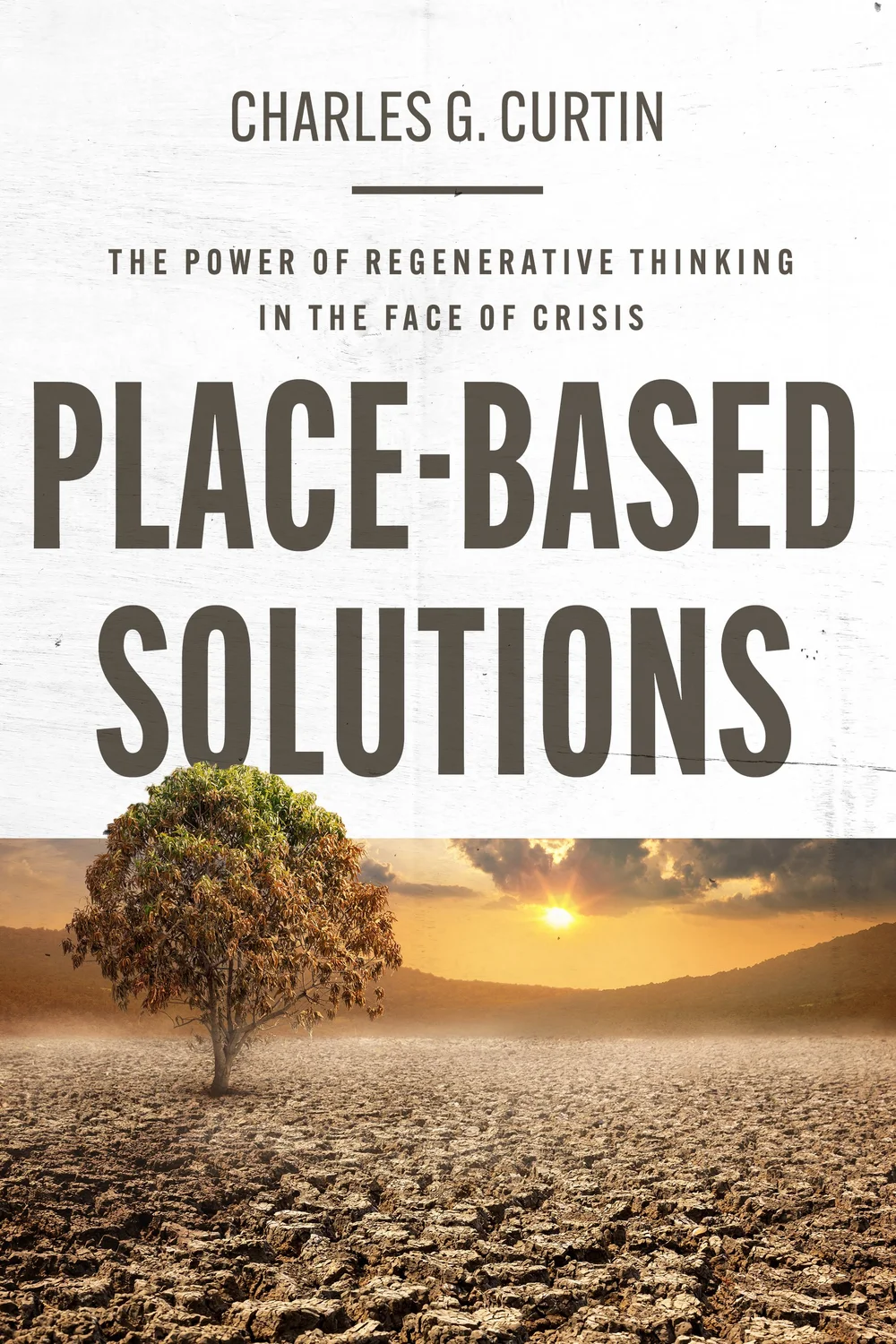
Charles Curtin, co-founder and science advisor, with Jim Wilson of the University of Maine, fisheries conservationists Robin Alden and Ted Ames, and Reverend Ted HoskinsThe work is documented extensively through several books and dozens of papers, including The Science of Open Spaces (2015) and Place-Based Solutions (2026).
Ecosystem design, field ops, and underwriting.
A land transition only holds together as one system. Money moves before the ecological response exists: we are the first to pay for the intervention itself, on verified work, not on a lagging outcome. Ecosystem design is the foundation it all runs on: the ecology, the work, and the finance, modeled and operated as one.
ECOSYSTEM DESIGN
Land, people, and capital, designed as one.
We read the land as it is, the watershed and water tables, the soil, the vegetation and wildlife, and the people who live on it, then design across all three layers at once: the ecology, shaped by meanders, earthworks, and catchments that slow the rain, work it back into the ground, and reverse the arroyos cutting the water away; the community and the governing entity that will steward it; and the capital that carries it. The design runs forward as scenarios, interventions sequenced over years, so every party can see what each does to productivity, to every operator’s balance sheet, and to the ecosystem itself.
ECOLOGY
Land health, fauna and flora.
Soil moisture and water retention capacity, nutrient cycling, soil organic matter, nematodes and the microbial community, eDNA, acoustic monitors for returning wildlife, satellite, and water gauges along the acequia ditch networks. Our measurement partner, Merge Impact, captures the full range of signals from the land.
OPERATIONS AND LOGISTICS
Every job tracked, from crew to buyer.
From the thinning crew, through the pyrolysis plant, to the acre where the biochar lands, and out to the buyers. Each job costed, scheduled, and tracked to delivery.
UNDERWRITING
Made for the people who price the risk.
One coherent, current set of evidence for every party's credit team: the insurer behind a parametric cover, a development or green bank, a corporate tracking the co-benefits of the credits it buys. Enough to size buffers, structure tranches, time releases and distributions, and run their parametric contracts, automated or assisted. The base case runs on proven, contracted streams; higher-value pathways are funded from a capped development sleeve and graduate when proven. Early projects carry wider spreads; verified history tightens them, and each project makes the next cheaper to finance.
LandStack runs the whole chain as one system, from the ecological design to the operations and the underwriting, so everyone financing the work reads the same ground truth.
See LandStackFire, Water, Jobs.

Turning wildfire liability into productive infrastructure.
In the country's largest wildfire settlement area, with zero revenue and no mechanism to bring it back. We are building the first one.
Modular pyrolysis turns fire-damaged timber into biochar, syngas, and clean energy; managed grazing, water work, and a local biochar and forestry economy follow. The first Industrial Revenue Bond pathway structured for ecological integrity in New Mexico.
Where we go next.
Wherever we go, the same commitments hold: we take no title, control, or lien on the land; we do not displace the people who steward it; and we never stretch a place into a deal that does not serve it.
Ogallala Aquifer
Nebraska, Colorado, Kansas
An aquifer drawn down faster than it refills, with invasive growth wasting the rest. Clearing it returns the water and yields biomass, a county model to repeat across the eight Ogallala states.
Iberia
Huelva, Algarve, Alentejo
Fragmented, degraded Mediterranean land no single owner is large enough to finance, aggregated into one investable program. Our intended first deployment in Europe.
Brazil
National transition credit
Some of the world’s softest landscape credit, but tracking so thin the money never becomes change on the ground. We tie that capital to verified field work and hold it to outcomes.
Taiwan-France
Rural France, demand from Taiwan
French farms heavily subsidized yet still failing as drought hits and state support shrinks. New revenue that doesn’t depend on Paris, linking local output to demand abroad.
We work with public and private actors in your region to stand up the financing, operations and governance to catalyze and scale lasting ecosystems.
From the upfront design of the land, the community, and the capital to a self-sustaining regional infrastructure that adapts as it learns. Four phases.
Develop
12-24 months
Ecological Design, the land modeled as it stands, then the meanders, earthworks, catchments, and grazing that bring it back
Governance Structure, the governing entity, the partners, and the bylaws set before ground breaks
Capital Structuring, IRB scoped, first-loss facility deployed, insurance guarantee negotiated
Landscape Assessment, measurement baseline and sensors live
Permitting & Procurement, modular equipment fabricated offsite in parallel
Offtake Agreements, buyer pipeline activated; capital draws gated on progress milestones
Transition
~1 year
Capital Deployment, IRB drawn, insurance guarantee active, working capital from first revenue
Verified signals, audit-ready; first revenue months 3-6
Bond Advisor Review, full review package delivered by Month 12
Stabilise
~2 years
Revenue Ramp, contracted output streams at volume, reaching ~€540/ha; the land recovering and the local economy self-supporting
First-Loss Exits, transition capital absorbed or recycled; IRB reprices
Institutional Entry Gate, commercial capital enters at stabilisation
Scale
Ongoing
Self-Sustaining, ~€870/ha, no subsidy; the region adapts and revises the plan as it learns
Institutional Governance, pension/sovereign capital holds for long-duration yield
Methodology Transfer, template deals replicate to new regions
Develop
12-24 months
Ecological Design, the land modeled as it stands, then the meanders, earthworks, catchments, and grazing that bring it back
Governance Structure, the governing entity, the partners, and the bylaws set before ground breaks
Capital Structuring, IRB scoped, first-loss facility deployed, insurance guarantee negotiated
Landscape Assessment, measurement baseline and sensors live
Permitting & Procurement, modular equipment fabricated offsite in parallel
Offtake Agreements, buyer pipeline activated; capital draws gated on progress milestones
Transition
~1 year
Capital Deployment, IRB drawn, insurance guarantee active, working capital from first revenue
Verified signals, audit-ready; first revenue months 3-6
Bond Advisor Review, full review package delivered by Month 12
Stabilise
~2 years
Revenue Ramp, contracted output streams at volume, reaching ~€540/ha; the land recovering and the local economy self-supporting
First-Loss Exits, transition capital absorbed or recycled; IRB reprices
Institutional Entry Gate, commercial capital enters at stabilisation
Scale
Ongoing
Self-Sustaining, ~€870/ha, no subsidy; the region adapts and revises the plan as it learns
Institutional Governance, pension/sovereign capital holds for long-duration yield
Methodology Transfer, template deals replicate to new regions
Degraded → Responding → Transitioning → Sovereign
Side by side with institutions.
Sovereign Land operates alongside national laboratories, universities, regulatory bodies, government agencies, landscape finance practitioners, and land management bodies, integrating with existing institutions, not replacing them. Insurers sit at the table as participants and beneficiaries: as the land comes back to health, the assets they insure are better protected, so their interest stays aligned with the partnership across the full horizon.


Research & Science
Operating in the Sandia National Laboratories and Los Alamos National Laboratory research corridor.
Landscape ecology and systems design methodology via Charles Curtin, landscape ecologist, chairs the New Mexico Biomass Working Group, with direct advisory pathway to the governor's office.
Landscape Finance & Advocacy
Aligned with Commonland's 4 Returns framework, financial, natural, social, inspirational capital.
Landscape-scale structuring informed by the largest transition finance practitioners in Europe.
Insurance companies engaged as dual-role participants, bond guarantors whose own insured assets benefit directly from integrity outcomes. Watershed protection and fire risk reduction reduce their claims exposure, keeping their incentives aligned with the project across the full investment horizon.
Conservation & Land Management
State land offices, tribal land managers, and county governments as operating partners.
Farmer, rancher, and forester cooperatives, and timber companies, as engagement pipeline.
We invite conservation organisations, land trusts, and stewardship bodies to engage as structuring partners.
Field work in New Mexico is carried out with Merge Impact, a field partner on the ground.
* The Geneva Papers on Risk and Insurance, January 2026 special issue on climate risks and insurance (8 papers).Partner with us.
Research institutions, conservation bodies, and landscape finance practitioners. We're building an open ecosystem.
High yield for generations.
Abundant land earns yield for generations, for the investors who fund it, the company that does the work, and the communities that steward it. We never buy the land.
Full investor detailsUnlock your landscape’s productivity, one barrier at a time.
We assess your landscape and map the path back to integrity and productivity, barrier by barrier: what it can produce and for whom, what each stage of the transition costs and earns, who carries which risks, and whether it can attract institutional capital. A clear answer, with the numbers, in 2 to 4 weeks.
Assess your landscape